How Local SEO Boosts Contractor Visibility in North Carolina
How to Use Local SEO to Generate More Leads for NC Contractors
Local SEO puts contractors in front of nearby customers who are actively searching for home services — and when it’s done right those searches turn into calls, booked estimates, and repeat work. This guide explains local SEO for contractors, why it matters across North Carolina’s competitive markets, and which practical tactics reliably grow leads. You’ll get clear steps for optimizing Google Business Profile (GBP), doing geo-specific keyword research, building citations and backlinks, managing reviews, and using AI-assisted automation to scale multi-location efforts. Throughout, we include action checklists, comparison tables, and examples you can use immediately to prioritize investments and track the right metrics.
Why Is Local SEO Essential for Contractors in North Carolina?
Local SEO means shaping your online presence so your business appears in local search results and map packs — where customers with strong buying intent can find and contact you immediately. It ties together business signals like GBP details, on-page location cues, reviews, and local citations with the intent behind geo-modified and “near me” searches, which tend to convert better than general queries. For contractors, that translates to more phone calls, booked estimates, and faster sales cycles because many searchers are ready to hire. With mobile and voice searches trending toward urgent service needs, occupying the local pack and offering clear contact options is essential. Next, we look at Raleigh-specific patterns where growth and dense competition make local rank advantages particularly valuable.
Because local SEO targets immediate, place-based intent, contractors should align their GBP and on-site signals to match how customers search and convert those views into booked jobs.
What Makes Local SEO Critical for Raleigh Contractors?
Raleigh’s growing residential and commercial markets concentrate demand for home services and produce steady local search volume for contractor queries like “plumber Raleigh” or “roofing company near north raleigh.” In markets like this, visibility in the local pack often outperforms even high organic rankings since maps are prominent on mobile and include one-tap call and directions buttons that shorten the conversion path. Contractors in the top three local slots usually capture a disproportionate share of calls and estimate requests. To win those spots, optimize service-area signals, category selection, and review velocity while reflecting neighborhood nuances and common search modifiers. Those local patterns guide the keyword and GBP tactics we cover next.
These Raleigh behaviors show the specific mechanisms that convert visibility into measurable lead growth, which we’ll explain in the following sections.
How Does Local SEO Improve Contractor Visibility and Lead Generation?
Local SEO works by aligning three core elements: a prominent Google Business Profile, localized on-page content, and reputation signals such as reviews and local backlinks. GBP creates the first impression in search and maps, your website validates the services and areas you cover, and citations and reviews reinforce trust that leads to clicks and calls. When these parts line up, a local query surfaces your GBP, the user calls or visits a well-optimized service page, and you capture the lead. Track GBP views, calls, direction requests, and form submissions to map the funnel from query to conversion and focus on the highest-impact levers. The next section gives a practical GBP optimization checklist to generate that initial visibility.
Optimizing your GBP is the fastest, highest-return task contractors can do to turn local intent into booked jobs — the checklist below shows how to get it right.
How to Optimize Your Google Business Profile for North Carolina Contractors
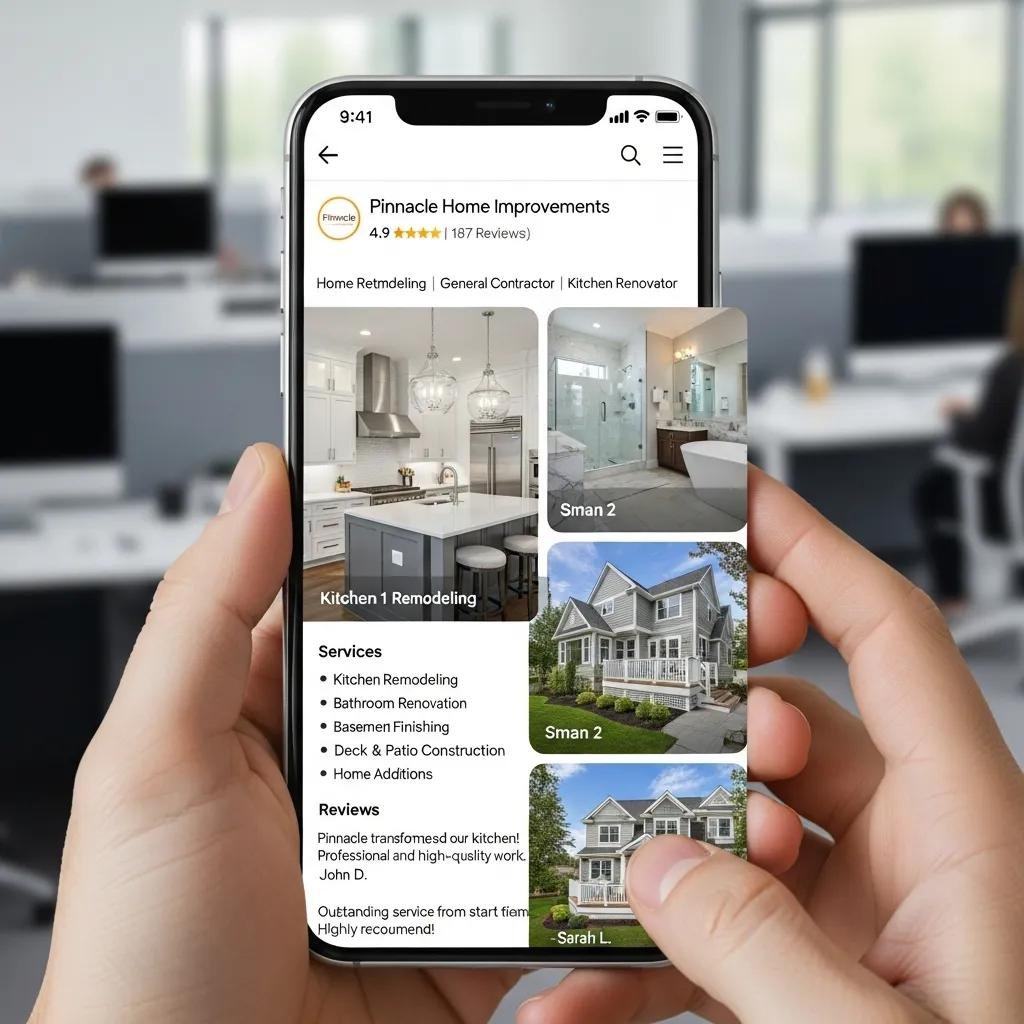
A well-configured Google Business Profile (GBP) is the most visible asset in local search and directly affects whether you appear in maps and the local pack for geo-specific queries. Key steps include claiming and verifying your profile, picking the most accurate primary and secondary categories, filling service and attribute fields, uploading high-quality photos, publishing regular posts, and managing Q&A and messaging to capture leads. Keep NAP (name, address, phone) or service-area information consistent and refresh your service listings regularly to signal relevance to Google and prospects. The table below compares important GBP fields and recommends options tailored for contractors.
| GBP Field | Attribute | Recommended Options for Contractors |
|---|---|---|
| Primary category | Impact on visibility | Choose the single most specific trade (for example, “Plumber”, “Roofing Contractor”) |
| Services section | Relevance and keyword coverage | List main services with location modifiers (for example, “Emergency Drain Repair — Raleigh”) |
| Photos & videos | Trust and engagement | Show before/after project photos and team shots with descriptive captions |
| Q&A & Posts | Freshness signals | Publish regular project updates and answer common service questions |
| Attributes & Hours | Local intent signals | Use attributes like “Free estimates” when applicable and set realistic service-area hours |
This comparison highlights that specificity, freshness, and visual proof drive GBP relevance for contractors, and that detailed service fields help profiles match high-intent queries. The next subsection walks through the exact steps to claim and verify a GBP with contractor-focused tips.
What Are the Key Steps to Set Up and Verify Your Google Business Profile?
Start by claiming or creating a GBP using the exact business name you display publicly and choose the most precise primary category for your trade. Enter service areas, phone, and website, then complete the services list and business description with clear, keyword-rich language that reflects the work you do across North Carolina. Make sure every entry matches your public NAP references to avoid conflicting signals. Verification usually arrives by postcard, phone, or email — pick the method that links the profile to a business email or verified account when possible for easier long-term management. After verification, add at least ten quality photos of projects, staff, and branded vehicles, and publish an initial GBP post highlighting a recent job or seasonal offer. These steps build a solid foundation for local pack visibility.
Once verified, use GBP features like posts, Q&A, and messaging to capture leads and build trust with prospects.
How Can Contractors Use Google Business Profile Features to Enhance Local Visibility?
Use GBP features to convert profile views into direct contacts: publish posts about recent jobs or seasonal services, add booking links to reduce friction for estimates, and use the services section to highlight specific offers. Photos should include close-ups, before/after sequences, and team shots with short captions that mention location and service type — these increase engagement and give Google contextual signals. Enable messaging or online booking when appropriate, and proactively seed the Q&A with answers to common questions that clarify service areas and processes. Regularly review GBP insights — views, searches, and customer actions — to see which posts and entries drive calls and adjust your messaging. Properly used, these features increase the chance of local pack placement and shorten the path from discovery to job booking.
Effective GBP use requires regular upkeep so fresh signals and accurate information keep driving local relevance and conversions.
Which Local Keyword Research Strategies Work Best for Contractors in North Carolina?

Good local keyword research finds the exact phrases North Carolina customers use and prioritizes terms that balance intent with achievable competition. Start with seed keywords for each service (for example, “roof repair”, “emergency plumber”) and expand by adding city, neighborhood, and intent modifiers like “near me”, “same day”, or “estimate” to capture high-converting queries. Use Search Console, local keyword tools, and competitor map-pack analysis to validate which phrases drive impressions and clicks in your service areas. Prioritize keywords by intent, estimated volume, and realistic competition so you focus on high-intent, mid-tail phrases likely to generate calls. The table below helps allocate content and GBP priorities across Raleigh and other NC locales.
| Keyword Type | Intent / Typical Volume | Best Use for Contractors |
|---|---|---|
| Service + City (e.g., “plumber raleigh”) | High hiring intent / moderate volume | Optimize GBP and service landing pages |
| Neighborhood modifier (e.g., “north raleigh plumber”) | High local intent / low-moderate volume | Create localized service pages and content |
| Long-tail intent (e.g., “how to stop water leak in ceiling raleigh”) | Informational with conversion potential / low volume | Use blog posts and FAQ content to capture early-stage leads |
Targeting a mix of city-level and hyperlocal long-tail phrases covers the full customer journey and increases the chance of appearing in both map packs and organic listings. The next sections explain practical methods for finding these keywords and how voice search affects selection.
How to Identify Geo-Specific and Long-Tail Keywords for Raleigh Contractors?
Build a seed list of core services, then expand it with Search Console query data, local keyword tools, and phrases pulled from competitor GBP descriptions and Q&A. Pay attention to Raleigh neighborhood and suburb names — many prospects search by community rather than the entire metro area — and map those modifiers to dedicated service pages. Compile long-tail, question-style phrases that indicate immediate intent (for example, “how much does a roof repair cost in raleigh”) and use them as FAQ entries and blog topics to capture early-stage queries. Validate opportunities with estimated clicks and impression trends and prioritize keywords you can realistically rank for within 6–12 months. This process creates a prioritized roadmap of pages and GBP entries tailored to Raleigh demand.
Place neighborhood-specific keywords on targeted service pages and in GBP entries to create matching signals that help local ranking; next we’ll cover voice search considerations.
How Does Voice Search Influence Local Keyword Selection for Contractors?
Voice queries are usually longer and conversational, often phrased as full questions or urgent requests. Optimize for voice by adding Q&A pairs and FAQ sections that mirror natural speech, using full-question headings with short, clear answers. This makes your content more eligible for spoken-answer features and helps voice assistants return your business. Use structured data (schema) to spell out services, service areas, and contact information so voice platforms can parse your details accurately. Typical voice queries include phrases like “who does emergency plumbing near me” or “best roofer in downtown raleigh,” so include those conversational variants in GBP descriptions and FAQ copy. Voice optimization broadens capture of high-intent, conversational queries and complements typed keyword targeting.
Winning voice-driven traffic requires question-format content plus structured markup so search platforms can present precise, local answers to people who need help now.
What Are Effective Citation and Backlink Building Tactics for NC Construction Companies?
Citations and backlinks are still crucial local ranking signals because they validate your presence and authority in the local market. High-value citations come from authoritative directories and local organizations, and backlinks from relevant local publishers and trade partners boost domain trust. Prioritize industry-specific directories (trade associations, contractor listings), local chamber and municipal pages, and reputable local business directories rather than low-value aggregators. Build partnerships with suppliers, associations, and community groups to earn natural backlinks via sponsorships, supplier directories, and local event coverage. Run regular audits to catch NAP inconsistencies and duplicate listings that create noise, and correct them to reinforce accurate information across the web. Below is a checklist of high-impact citation and backlink sources to start with.
This checklist highlights prioritized sources that typically deliver the best local signals:
- Industry and trade association directories relevant to your trade and state.
- Local chamber of commerce and municipal business listings that confirm locality.
- Supplier and manufacturer partner pages that list contractors as approved vendors.
- Local news coverage and community sponsorship pages that create editorial backlinks.
- Quality business directories with editorial oversight rather than automated scraped listings.
Consistent citation and backlink work strengthens local relevance and should be paired with the audit workflow described below to maintain accuracy.
How to Ensure NAP Consistency Across Local Directories and Industry Listings?
Create a master NAP record that lists your exact preferred business name, service areas, and contact channels, then use citation management tools to compare live listings against that master. Tackle high-authority directories first, then remove duplicates and update outdated entries on smaller sites. Claim listings where possible and submit authoritative updates; for unclaimable entries, follow each directory’s correction process or request removal when the data is clearly wrong. Set a monitoring cadence — quarterly checks work for many contractors — to catch new inconsistencies and keep data aligned across providers. Maintaining strict NAP consistency reduces algorithm confusion and improves the odds of stable local rankings.
Preventing citation drift preserves trust signals over time and lets other local SEO activities like review strategies and targeted content have predictable effects.
Which Local Partnerships and Press Releases Boost Contractor Authority?
High-impact partnerships include supplier and manufacturer endorsements, trade association affiliations, and relationships with local real estate professionals that generate mentions and links on relevant pages. Sponsoring community events or supporting local nonprofits often leads to editorial coverage in neighborhood outlets and community calendars — these links carry strong local relevance. When issuing press releases, focus on locally newsworthy angles such as safety initiatives, certifications, or pro bono projects instead of flat promotional pitches; local journalists respond to community impact. Turn partnerships into authoritative links by asking partners to list you on vendor pages and by contributing expert how-to articles to local publications. Contextual backlinks like these boost topical authority and drive referral traffic from audiences likely to convert.
Partnership-driven backlinks work best when they’re local, relevant, and tied to verifiable community or industry activity; they also support the reputation efforts covered next.
How to Manage Online Reputation and Reviews for North Carolina Contractors
Reviews are a primary trust signal for local customers and a meaningful ranking factor for the local pack. A steady program of review solicitation, timely responses, and ethical generation lifts both visibility and conversion. Make asking for reviews a routine part of closing a job: ask satisfied clients to share their experience, give simple instructions for leaving feedback, and follow up with reminders. Respond to reviews promptly and professionally — thank positive reviewers publicly and handle negative feedback with calm offers to resolve issues offline. Reuse review content as testimonial snippets on service pages and GBP posts to amplify social proof and add fresh content signals. The subsections below outline best practices for requesting reviews and handling escalations.
What Are Best Practices for Soliciting and Responding to Contractor Reviews?
Timing matters: ask for reviews right after job completion when satisfaction is highest, and give clear, short instructions on where and how to leave feedback. Use multiple touchpoints — a verbal ask at the end of the job, a follow-up message, and one polite reminder — to raise response rates without pressuring clients. Personalize responses, mention project details, and thank customers for their business; with five-star reviews, get permission to use the testimonial on your site. For neutral or mixed reviews, acknowledge the concern and offer a direct channel to resolve any outstanding items. This transparent approach builds future client confidence and creates authentic content that both search engines and prospects trust.
Structured solicitation plus careful responses turn reviews into content assets and trust signals that improve ranking and conversion — and they set the stage for how to handle negative feedback.
How to Handle Negative Feedback and Protect Contractor Credibility?
When negative feedback appears, reply quickly with an empathetic, professional message that acknowledges the customer’s experience and offers a clear path to resolution — this shows public accountability. Avoid defensive language, propose a specific remediation (for example, an on-site review or direct contact), and move the conversation offline to protect privacy while resolving the issue. If you reach a satisfactory outcome, politely ask whether the customer would consider updating their review. For false or fraudulent reviews, follow the platform’s dispute process and keep records to support removal requests. A standardized escalation workflow preserves credibility, reduces escalation risk, and can turn complaints into opportunities to display professionalism.
Consistent reputation processes, paired with monitored review velocity, minimize the long-term impact of occasional negatives and let positive reviews build authority over time.
How Does SEORaleigh’s OTTO AI Platform Enhance Local SEO for Contractors?
SEORaleigh presents itself as an AI-enabled local SEO partner for Raleigh-area businesses, combining local know-how with automation through a partnership with Search Atlas and the OTTO AI platform. OTTO AI speeds up routine local SEO tasks — generating GBP posts, monitoring profile health, and suggesting category and service optimizations — so contractors can scale consistent signals across multiple service areas without heavy manual effort. The OTTO Agency Assisted SEO model blends AI automation with human oversight to keep outputs locally accurate and aligned with E-E-A-T standards, enabling faster iteration on content, citations, and GBP updates. SEORaleigh’s model emphasizes AI-driven efficiency plus local market knowledge as the edge for contractors chasing North Carolina search demand.
In What Ways Does AI Automate Google Business Profile Optimization?
AI can generate and schedule GBP posts from recent projects, create timely service updates tied to seasonality, and flag missing attributes or inconsistencies across multiple profiles for quick fixes. For multi-location contractor portfolios, OTTO-like workflows standardize service descriptions while inserting location modifiers and custom photo captions for each area, keeping profiles locally relevant at scale. Automated monitoring sends alerts for verification issues, suspended listings, or emerging negative reviews so teams can react fast and protect visibility. Human review stays in the loop to confirm tone and accuracy, but automation reduces repetitive work and shortens the time from detection to correction.
Automated GBP workflows increase profile freshness and consistency, which directly supports more reliable local pack visibility across a contractor’s service footprint.
How Does AI Support Content Generation and Competitive Analysis for Contractors?
AI helps produce localized content drafts — service pages, blog posts, and FAQ answers — that include target keywords and neighborhood modifiers, allowing faster content coverage across service areas. It can run competitive gap analyses to reveal keywords nearby competitors rank for that you don’t, recommend content or GBP changes to capture those gaps, and rank tactical changes by likely impact. AI-generated briefs speed production, while human editors check for accuracy, local nuance, and E-E-A-T compliance. This mix gives contractors a steady pipeline of optimized content and actionable competitive insights without sacrificing quality or local relevance.
Combining machine-driven ideation with human curation gives a practical workflow to expand local content coverage and react quickly to competitive shifts.
What Are Proven Case Studies Demonstrating Local SEO Success for NC Contractors?
Anonymized case studies show how coordinated local SEO work — GBP optimization, targeted content, citation cleanup, and AI-scaled processes — drove measurable gains in visibility and lead volume for North Carolina contractors. Typical results include entry into top-three local pack rankings for primary queries, doubling GBP calls, and better lead form conversions through improved service pages and CTAs. The table below summarizes anonymized client types, primary tactics, and outcomes to set realistic timelines and expectations. After the table we highlight immediate takeaways contractors can apply now.
| Client Type | Primary Tactic | Measured Outcome |
|---|---|---|
| Roofing contractor (metro NC) | GBP overhaul + localized service pages | Local pack entry; 65% increase in calls in 4 months |
| Plumbing company (suburban NC) | Citation cleanup + review velocity program | 48% lift in GBP views and 30% more booked estimates |
| HVAC provider (multi-location) | AI-driven GBP posts + content scaling | 2x increase in weekly profile interactions and improved organic traffic |
These anonymized results show that coordinated GBP work, local content, and reputation management deliver tangible lead growth within months when executed consistently. Below we offer short vignettes and a quick call-to-action — a Free Website Analysis — for contractors who want a diagnostic next step.
Which Contractors Have Achieved Significant Lead Growth Through Local SEO?
A roofing client in a North Carolina metro area boosted visibility after a targeted GBP strategy and neighborhood landing pages, breaking into the local pack in about three months and seeing a notable uptick in estimate requests — a reminder that category specificity and strong images matter. A suburban plumbing firm cleaned up citations and implemented a review solicitation workflow to create steady review velocity, which improved map visibility and produced more scheduled service calls in roughly four months. A multi-location HVAC provider used automated GBP posts and scaled local content to double profile interactions across towns; the key lesson was that automation plus local editorial oversight enabled rapid expansion without losing local nuance.
These examples show that focused, consistent tactics aligned with local intent typically yield measurable lead increases within 3–6 months. Track GBP views and calls as primary attribution metrics.
What Metrics Illustrate the Impact of AI-Powered SEO on Contractor Visibility?
Useful KPIs for AI-assisted local SEO include GBP views, search queries driving profile interactions, clicks-to-call, direction requests, local organic rankings, and completed leads or estimate bookings. Gains usually show first as increased GBP searches and profile interactions, then higher phone volume and form submissions. AI-driven workflows speed up updates and monitoring, shortening the time between insight and action. Visible KPI changes can appear within weeks for GBP post-driven interactions and in several months for organic ranking and conversion improvements. The table below shows common metrics and realistic improvement ranges seen in anonymized projects.
| KPI | Description | Realistic Improvement Range |
|---|---|---|
| GBP Views | How often the profile is seen | 30–80% increase within 2–4 months |
| Calls / Clicks-to-Call | Direct phone actions from GBP | 25–65% increase after GBP optimization |
| Local Pack Rankings | Number of queries ranked in top 3 | Move into local pack for target terms in 3–6 months |
Track these KPIs and tie gains to coordinated GBP, content, and automation work so you can set expectations and prioritize the highest-impact local SEO investments.
How to Get Started with Local SEO Services for Contractors in North Carolina
Start with a focused audit of GBP, service pages, citation consistency, and review health to identify quick wins and build a prioritized roadmap. Immediate actions include claiming and verifying GBP, fixing NAP inconsistencies, soliciting recent positive reviews, and optimizing one or two high-value service pages with geo-modified keywords to capture near-term demand. Set up basic tracking — Google Search Console and local call tracking — to measure the effects of changes and guide iterative improvements. When evaluating agencies, prefer partners that combine local experience with scalable automation so routine tasks are handled efficiently while human oversight preserves local nuance and quality; SEORaleigh’s OTTO Agency Assisted SEO model is one example of that balance.
Here’s a five-step action plan contractors can implement today to start capturing local leads.
- Claim and verify your Google Business Profile and confirm your primary category.
- Audit and fix NAP inconsistencies across top directories and supplier pages.
- Solicit 5–10 recent customer reviews and post a thank-you response to each.
- Optimize 1–2 high-value service pages with city and neighborhood modifiers.
- Set up tracking (Search Console and call tracking) to measure calls and form leads.
These steps create immediate momentum. After implementing them, assess whether you need managed services or automation to scale across multiple service areas.
What Are the First Steps to Boost Contractor Visibility Using Local SEO?
Begin with an audit to find gaps in GBP completeness, citation inconsistencies, service-page keyword coverage, and review presence so you can prioritize the fastest-impact fixes. Then implement quick wins: complete GBP fields, upload project photos, correct obvious NAP discrepancies on authoritative directories, and publish one localized service page aimed at a high-intent keyword. Put a review solicitation and response cadence in place and schedule weekly time to publish GBP posts or project updates. Finally, monitor progress with GBP insights and Search Console to see which changes move the needle and shift focus accordingly.
These first steps prepare contractors to continue with a DIY approach or to engage a managed partner for scaling, which the next section covers.
How Can Contractors Leverage SEORaleigh’s Expertise and AI Solutions?
Contractors can work with SEORaleigh to combine local strategy and OTTO AI automation under a managed service that targets GBP dominance, page optimization, and Raleigh-specific execution. SEORaleigh’s OTTO Agency Assisted SEO pairs automated GBP updates and content generation with human review to keep outputs accurate and aligned with E-E-A-T standards while speeding tasks like post scheduling, service attribute tuning, and profile monitoring. An initial Free Website Analysis identifies critical visibility gaps and recommends prioritized actions — a diagnostic that shows where GBP, content, or citation work will deliver the fastest returns. For contractors weighing outsourcing, SEORaleigh’s model offers a practical mix of AI efficiency and local expertise to reduce manual work while preserving the local context needed for North Carolina markets.
This onboarding path — audit, prioritized quick wins, and scaled automation — creates a clear, practical route from discovery to measurable lead growth for contractors ready to invest in sustained local SEO.