How to Improve Your Contractor SEO in NC

Essential Local SEO Foundations for Contractors in North Carolina
Contractors in North Carolina often struggle to convert local search interest into qualified calls and booked projects because their online presence lacks consistent, localized signals. This guide explains practical, local-first SEO steps that contractors can implement to improve visibility in search and on Google Maps while highlighting how AI-enabled automation can accelerate results. You will learn the core local SEO foundations for NC contractors, a repeatable keyword research and content workflow, technical priorities that move the needle, link-building and reputation strategies, and a prioritized implementation roadmap. The article also shows how AI — specifically the OTTO platform used by SEORaleigh — maps to common contractor tasks to save time on audits, on-page tweaks, and local listing updates. Read on for checklists, tables, and tactical examples that you can apply to roofing, plumbing, remodeling, HVAC, and general contracting businesses across Raleigh and broader North Carolina. The sections below mirror typical project phases so you can move from audit to measurable improvement with a clear sequence of actions.
What Are the Key Local SEO Foundations for Contractors in North Carolina?
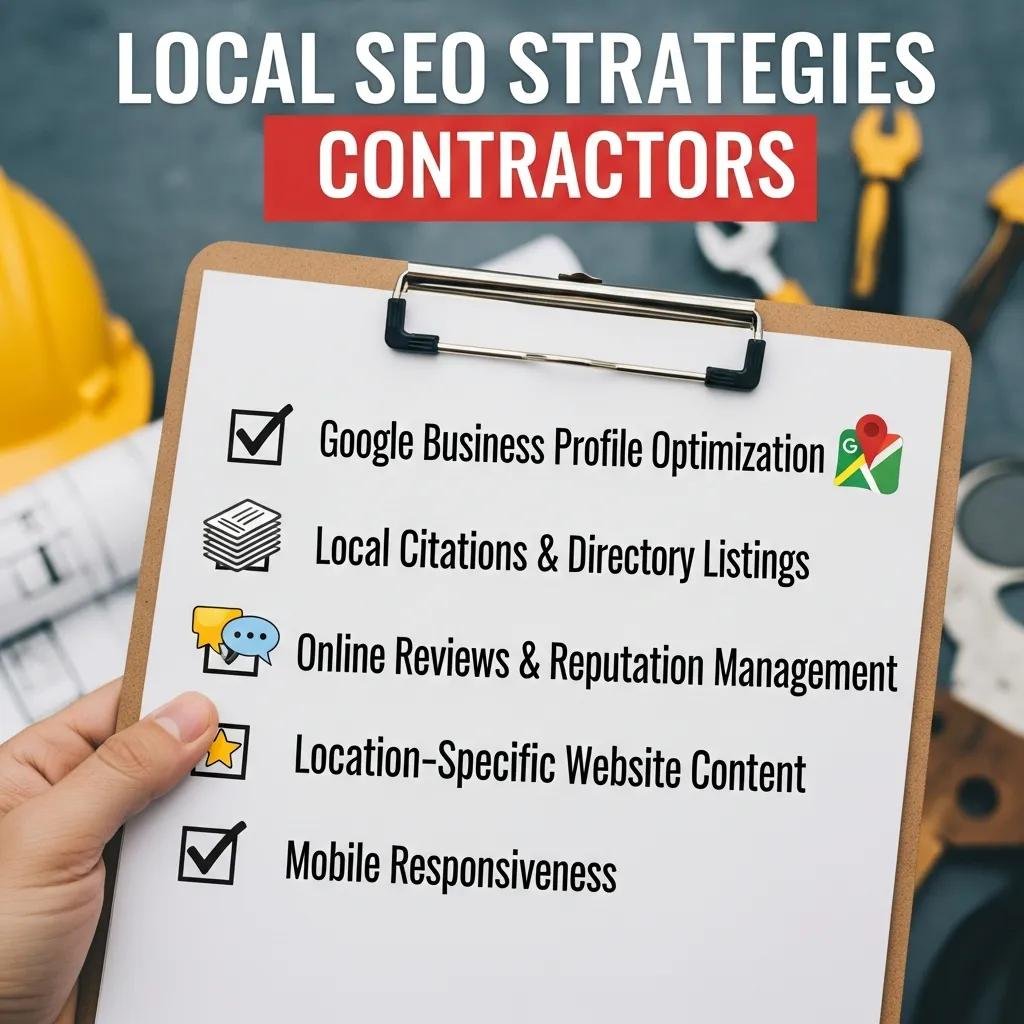
Local SEO foundations are the core signals search engines use to determine whether a contractor is relevant to a nearby searcher, and they work by reinforcing consistent location, service, and reputation data across the web. Establishing a complete Google Business Profile, consistent NAP (name, address, phone) across citations, a proactive review strategy, and service-area landing pages creates strong local relevance that increases visibility and clicks. These foundations reduce friction for prospective clients searching for “contractor website SEO” or “Raleigh contractor SEO” and directly influence map pack placement and local organic rank. Below is a compact checklist contractors can follow to shore up these essentials before moving into content or technical work.
The most important local SEO items include GBP completion, citation consistency, review generation and responses, localized service content, and locally relevant backlinks. Implementing these items in sequence builds a stronger local footprint that supports higher-intent keywords and improves conversion rates from search traffic. Next, we’ll examine how Google Business Profile optimization specifically boosts visibility on Search and Maps.
Google Business Profile optimization enhances local visibility by providing complete, category-accurate information and frequent, relevant activity that signals freshness and service intent to Google. A fully optimized GBP increases the chance of appearing in local queries and drives more profile views, direction requests, and phone clicks — all measurable engagement metrics. The following mini-checklist shows GBP actions that have the highest near-term impact for contractors.
- Complete all profile fields including primary and secondary categories, service listings, and business description.
- Add service-area details and service-specific attributes so Google can match queries like “roofing contractor raleigh.”
- Publish regular posts about projects, promotions, and seasonal services and upload high-quality project photos weekly.
- Use Q&A to answer common pre-sales questions and pin helpful responses that reduce friction for callers.
These steps create stronger local signals and a clearer conversion path from the profile to your site or phone inquiry. Proper GBP setup also leads into consistent citation management, which we address next in the context of long-term reputation and trust.
Why Is Managing Local Citations and Online Reviews Crucial for NC Contractors?
Citations and reviews create distributed evidence of a contractor’s existence and quality; consistent citations signal trustworthiness, while reviews influence click-through and conversion rates from both maps and organic results. Maintaining consistent NAP fields across major directories, industry-specific listings, and local chambers reduces conflicting signals that can confuse ranking algorithms. A simple workflow for solicitation, monitoring, and response improves review velocity and demonstrates responsiveness that prospective clients read as reliability.
- Maintain consistent NAP entries across primary directories, trade sites, and state/local business listings.
- Prioritize trade associations, local chambers, and construction-specific directories for higher relevance.
- Implement a review request workflow that asks satisfied clients to leave details about the project and materials used.
Consistent citations and active review management make GBP insights and site signals more reliable for Google, which in turn improves local relevancy and drives more qualified leads. The next section describes a compact EAV-style comparison of these core local elements and their expected impact.
Different local SEO components produce distinct outcomes; the table below summarizes the primary elements, the attribute to manage, and the expected impact on visibility and leads.
| Component | Attribute to Manage | Expected Impact |
|---|---|---|
| Google Business Profile | Complete categories, services, photos, posts | Increased map pack visibility and higher profile actions |
| Citations & Directory Listings | NAP consistency and category alignment | More consistent local signals and reduced ranking confusion |
| Online Reviews | Volume, recency, and response quality | Improved trust, higher CTR, and better conversion rates |
| Local Landing Pages | Geo-specific content and structured data | Higher organic relevance for city-modified search terms |
This table clarifies which actions to prioritize when resources are limited: start with GBP and citations, then focus on reviews and localized content to compound gains. With citations and reviews aligned, contractors can move into targeted keyword research that connects search intent to service pages.
How Can NC Contractors Perform Effective Keyword Research and Content Optimization?

Keyword research for NC contractors targets transactional and local-intent phrases that match services, service areas, and urgent needs; the mechanism is mapping searcher intent to page purpose so each landing page satisfies both user and algorithmic signals. Effective research begins by listing core services, appending locality modifiers (city, neighborhood, region), and separating high-intent lead keywords from informational queries. The result is a content plan that prioritizes service pages for lead capture and supporting content for awareness and voice search optimization.
A simple three-step process helps teams keep keyword work repeatable and scalable:
- Identify primary service keywords and map them to page templates (e.g., “roofing contractor”).
- Append geo modifiers and prioritize by search intent (e.g., “roofing contractor raleigh” = transactional).
- Create supporting content for informational queries and long-tail local phrases to capture discovery traffic.
This process ensures content assets align with search intent and that each page has a clear conversion goal. Next, we’ll look at specific high-intent examples to prioritize by volume and intent.
Which High-Intent Local Keywords Should Contractors Target in North Carolina?
High-intent local keywords include direct service + city combinations and emergency or project-specific queries that signal immediate need and willingness to hire. Examples vary by major NC markets; prioritizing transactional terms over broad informational phrases increases lead quality and shortens the sales funnel. Use search volume and local competition to rank these in order and then build or optimize landing pages accordingly.
- “roofing contractor raleigh” — transactional intent for roofing services in Raleigh.
- “emergency plumber charlotte” — high urgency, immediate lead potential in Charlotte.
- “home remodeling contractor wilmington” — commercial investigation intent with project scope.
- “hvac repair near me” — voice-search and proximity-driven transactional intent.
Targeting these terms with dedicated service pages and schema-enhanced content improves match relevance and click-through from both organic and map results. The next section explains how entity-rich content strengthens topical authority for these keyword targets.
How to Create Entity-Rich Content That Resonates with NC Construction Clients?
Entity-rich content uses explicit references to services, materials, certifications, neighborhoods, and project types so search engines can form clear semantic relationships and match content to local queries. The mechanism is constructing sentences and sections that link entities — for example, “asphalt shingles,” “roof replacement,” “Raleigh suburbs” — in ways that mimic real project descriptions and local context. This builds topical authority and improves relevance for both human readers and AI-driven search systems.
- Include project case studies with city and neighborhood names and specific materials used.
- Use structured data for Service, LocalBusiness, and Project where applicable to expose entities to search engines.
- Internally link from general service pages to local landing pages and case studies to strengthen entity connections.
Entity-rich pages convert better because they answer local, practical questions and demonstrate real-world experience. Structured content prepares the site for schema implementation, which is covered in the technical essentials section.
What Technical SEO Essentials Should Contractors Implement for Website Optimization in NC?
Technical SEO ensures contractor websites are discoverable, fast, and indexable; this works by reducing friction for crawlers and users through mobile-first design, optimized speed, clean crawl paths, and structured data. Contractors should prioritize mobile responsiveness because most local searches occur on mobile devices, and they should measure performance with Core Web Vitals to target improvements that reduce bounce and improve conversions. Below is a prioritized checklist that balances impact and ease of implementation.
- Ensure responsive, mobile-first templates and service pages with clear click-to-call elements.
- Optimize site speed through image compression, caching, and efficient hosting configurations.
- Implement LocalBusiness, Service, FAQ, and Project schema where appropriate and validate with testing tools.
These technical fixes lower user friction and increase the likelihood of search engines surfacing your content for local queries. To make priorities easier to compare, the table below maps technical items to measurable outcomes and priority levels.
| Technical Component | Measurable Outcome | Priority |
|---|---|---|
| Mobile Responsiveness | Lower bounce, higher engagement on mobile | High |
| Site Speed (LCP, FID, CLS) | Faster load times, improved rankings and conversions | High |
| Structured Data (Schema) | Enhanced SERP features and better indexing | Medium |
| SSL & Crawlability | Secure browsing and complete indexing | Medium |
Target mobile and speed wins first, then add schema to unlock richer search appearances and better match for local intent. The next subsections unpack speed and schema in practice.
How Do Mobile-Friendliness and Website Speed Impact Contractor SEO in North Carolina?
Mobile-friendliness and speed directly affect user behavior and ranking signals because they determine how quickly a prospective client can view services, estimate scope, and contact a contractor. Key metrics to measure include Largest Contentful Paint (LCP), First Input Delay (FID), and Cumulative Layout Shift (CLS); improving these lowers abandonment and increases lead capture. Quick wins like compressing images, enabling caching, and reducing third-party scripts often produce measurable load-time improvements in days rather than weeks.
- Aim for LCP under 2.5s, FID under 100ms, and CLS under 0.1 to align with best practice thresholds.
- Use responsive image formats, lazy loading for below-the-fold images, and server-side caching to reduce page weight.
- Streamline critical path CSS and defer non-essential JavaScript to improve load and interaction times.
Improving mobile performance not only helps rankings but also increases contact conversions from local searches, which makes technical work directly revenue-impacting. After addressing speed, adding structured data increases clarity for search engines how your services map to queries.
Why Is Schema Markup Important for Construction Company Websites in NC?
Schema markup provides structured labels that tell search engines what a page is about — for contractors, LocalBusiness, Service, HowTo, Project, and FAQ markups clarify service offerings, project scope, and customer outcomes. This mechanism increases the chance of rich results like service snippets, FAQs, and project galleries appearing in search, which improves CTR and helps searchers quickly find what they need. Implementing schema with correct property values (serviceType, areaServed, review) yields clearer entity relationships between your pages and local search queries.
- Add LocalBusiness schema to homepage or contact pages with serviceType and areaServed fields.
- Use Service schema on each service page and Project schema for case studies to expose project details.
- Validate schema with testing tools and monitor for errors after deployment.
Structured data enhances crawl-time understanding and prepares your content for future AI-driven search features. Once schema is in place, contractors should work on authority and links to amplify content reach.
How Can NC Contractors Build Authority and Backlinks to Enhance SEO Performance?
Building authority is about earning third-party endorsements — links, mentions, and press — that signal trust and expertise to search engines, accomplished through local partnerships, PR, and valuable project content. The mechanism is creating link-worthy assets like project showcases, community sponsorships, supplier collaborations, and local guides that naturally attract relevant links. This authority compounds with technical and on-page improvements to lift organic visibility for competitive service keywords.
A set of practical local link-building tactics for contractors includes outreach to industry associations, supplier pages, and local media opportunities that highlight notable projects. Consistent promotion of project case studies and community involvement increases the chance of acquiring links from high-relevance sources that directly support local rankings. Below are specific tactics to prioritize.
- Sponsor local events or trades and secure acknowledgements on sponsor pages.
- Publish detailed project case studies and pitch them to local news outlets or trade blogs.
- Request supplier or manufacturer backlinks when your project features their products.
These activities create durable signals that improve domain authority and referral traffic. Next, we’ll look at targeted local link tactics and then discuss how online reputation management supports link and trust signals.
What Local Link Building Strategies Are Effective for North Carolina Construction Firms?
Local link building relies on relationships and regional relevance that connect your projects to community and trade networks; it works by creating mentions and links that are locally contextual and topically related. Effective tactics emphasize local associations, project features on vendor sites, and city-specific resources that position your firm as a visible local expert. Outreach approaches that focus on mutual value — such as supplying project photos or guest articles — have higher success rates than generic link requests.
- Target local chambers of commerce, neighborhood associations, and state contractor boards for directory and profile placements.
- Offer documented case studies or project galleries to suppliers and manufacturers in exchange for a project feature link.
- Pitch local press with human-interest angles about community impact, safety innovations, or project timelines.
Prioritize relationships that produce contextual links and mentions; such links carry more local relevance than generic directory entries. Managing your online reputation amplifies the value of these links and is addressed in the next subsection.
How Does Managing Online Reputation Influence Contractor SEO in NC?
Online reputation management connects review volume, response quality, and sentiment to real-world conversion outcomes; it works because searchers rely heavily on reviews when choosing contractors and search engines use review signals to assess trust. A consistent review solicitation flow paired with timely, professional responses reduces friction for new clients and helps maintain a steady stream of fresh, relevant user-generated content. Monitoring reputation also surfaces service issues that, if resolved publicly, can improve perceived reliability and future review behavior.
- Send post-project review requests that ask for specific details about scope and outcomes to guide richer reviews.
- Respond to both positive and negative reviews promptly, addressing concerns and noting corrective actions taken.
- Use reputation monitoring tools on a set cadence to detect trends, disputes, and opportunities to ask for updates from satisfied clients.
Well-managed reputation profiles increase user trust and often lead to better GBP performance and higher lead conversion rates. The next section explains how AI tools like OTTO can help scale these repetitive tasks.
How Does Leveraging AI with OTTO Enhance Contractor SEO in North Carolina?
AI platforms like OTTO streamline repetitive SEO tasks and accelerate tactical optimizations by automating audits, on-page adjustments, and local listing updates; OTTO operates as an AI-driven layer that identifies issues and applies or recommends fixes at scale. This mechanism reduces time-to-action for common problems like missing metadata, inconsistent citations, and GBP gaps, allowing contractors to focus on projects while optimization happens continuously. The table below maps OTTO-style features to contractor tasks and expected time savings to illustrate where automation provides the largest return.
| Feature | Mapped Task | Time Savings / Outcome |
|---|---|---|
| Automated Crawls & Audits | Detect missing metadata, broken pages | Faster issue detection, prioritized fixes |
| GBP & Citation Automation | Update listings and maintain NAP consistency | Reduced manual effort, improved local accuracy |
| Content Suggestions | Generate on-page optimization ideas for service pages | Faster production of entity-rich content |
These mappings show how automation can offload routine tasks and maintain a consistent optimization cadence, which supports better rankings and faster improvements. The following H3 explores concrete examples of automated tasks that help contractors specifically.
In What Ways Does AI Automate SEO Tasks for NC Contractors Using OTTO?
OTTO automates workflows such as scheduled audits, Google Business Profile updates, citation syncs, and prioritized on-page metadata suggestions to reduce manual maintenance burdens for contractors. For example, OTTO can flag pages missing Service schema or generate localized meta descriptions for multiple city landing pages, saving teams the time of manual edits. Automating these tasks means more consistent signals across listings and pages, which often translates into measurable ranking and visibility gains within weeks rather than months.
- OTTO can run recurring audits and create prioritized fix lists for technical and content issues.
- It can automatically push consistent NAP and service updates to key local listings and GBP attributes.
- It suggests and sometimes implements metadata and on-page tweaks that align pages with high-intent local keywords.
By automating these workflows, contractors reclaim time for estimating and project delivery while maintaining a continuous optimization loop. The next subsection describes how OTTO’s real-time tracking sharpens iterative improvements.
How Can Real-Time Performance Tracking with OTTO Improve SEO Results for Contractors?
Real-time tracking collects performance signals — rankings, GBP actions, and lead indicators — and converts them into alerts and prioritized actions so teams can respond quickly to opportunities or regressions. The mechanism is shortening the feedback loop between change and outcome: when a GBP post or a new local landing page produces a measurable increase in profile actions, OTTO highlights that correlation so the tactic can be scaled. Monitoring KPIs like keyword rank movement, profile views, and form submissions in near real-time improves decision-making and reduces time-to-impact.
- Track KPIs such as local keyword rankings, GBP views/actions, and contact form conversions continuously.
- Configure alerts for ranking drops or GBP changes so corrective actions can be initiated immediately.
- Use iterative A/B style adjustments for titles and meta descriptions and monitor small uplifts to scale winning variants.
Faster iteration produces quicker evidence of what works in specific NC markets, enabling contractors to invest in high-return optimizations. After understanding the role of AI, the roadmap below shows how to sequence these efforts in practice.
What Is the Step-by-Step Implementation Roadmap for Improving Contractor SEO in NC?
A clear roadmap prioritizes actions that deliver early wins while laying the foundation for sustained growth: audit and benchmarking, GBP and citations, on-page/content, authority building, and continuous monitoring. This sequence works because early technical and listing fixes unlock search visibility that content and links can then amplify. The numbered steps below provide a concise sequence contractors can follow with expected timeframes and a note about where AI-driven services like OTTO via SEORaleigh can accelerate each step.
- Audit & Benchmark (weeks 1–2): Run a complete technical, GBP, and content audit to capture current baselines. AI-powered tools can complete audits faster and prioritize fixes automatically.
- GBP & Citations Setup (weeks 2–4): Complete profile fields and standardize citations across directories to stabilize local signals. Automation can sync citations and maintain NAP consistency.
- On-page & Local Content (weeks 3–8): Build service pages, local landing pages, and entity-rich case studies targeted to prioritized keywords.
- Backlinks & Local Authority (months 2–6): Execute local outreach, supplier partnerships, and PR to earn contextual links that amplify content.
- Monitor & Iterate (ongoing): Track KPIs, respond to reputation items, and iterate on pages based on performance signals.
This roadmap balances quick technical wins with longer-term authority work and indicates where automation is optional but impactful. In the next section, we explain how to initiate services with SEORaleigh using OTTO if you want a managed path.
How to Get Started with SEORaleigh’s AI-Powered SEO Services for NC Contractors?
To begin a managed engagement, SEORaleigh typically starts with discovery, a comprehensive audit, and a rapid implementation plan focused on the highest-impact local fixes; OTTO is used to automate audits, maintain citations, and speed on-page optimization while the agency coordinates content and link outreach. The onboarding steps clarify deliverables and early actions so contractors see value within the first 30–90 days.
- Initial audit and discovery to capture baselines and prioritized issues.
- Quick wins delivered in the first 30 days, such as GBP completion, citation fixes, and critical technical patches.
- A 30/60/90 plan with monthly deliverables and reporting cadence that shows progress against KPIs.
Contractors interested in an assisted approach can request an audit or consult with SEORaleigh to discuss how OTTO-driven automation fits their budget and timeline; this managed option is designed to free internal resources for core operations while the agency handles continuous optimization. The final subsection lists best practices for ongoing monitoring and optimization.
What Are the Best Practices for Ongoing SEO Monitoring and Optimization in North Carolina?
Ongoing SEO requires a disciplined cadence of monitoring, content refreshes, and technical reviews so gains are sustained and scaled over time; a monthly review cycle for KPIs plus quarterly deep content audits balances responsiveness and strategic updates. Track a focused set of KPIs including local keyword rankings, GBP views/actions, contact conversions, and review trends to keep efforts aligned with business outcomes. Use automation tools to surface anomalies, but pair alerts with human prioritization for outreach and content creation.
- Review core KPIs monthly and perform content and technical audits quarterly.
- Use tools such as search console data, analytics, GBP insights, and AI-driven platforms to detect changes and opportunities.
- Run periodic content updates for top-performing pages and refresh project case studies to maintain relevance.
A steady monitoring rhythm combined with targeted updates ensures that improvements become compounding advantages rather than one-off spikes. With these practices in place, contractors can sustain and grow local search performance across North Carolina.