Maximize Local SEO With AI Tools

AI-Powered Local SEO Strategies for Small Businesses & Contractors
AI-powered local SEO uses machine learning and natural language processing to align local search signals with user intent, improving visibility for nearby customers and increasing qualified leads. This article shows how AI streamlines keyword research, automates Google Business Profile (GBP) tasks, generates hyperlocal content, and scales reputation management to convert searches into measurable local lead generation for small service businesses and contractors. You will learn which AI tactics produce the biggest efficiency gains, practical steps to implement them, and how to measure outcomes that matter for local conversion. The guide covers four actionable areas: high-level strategy gains, GBP optimization, hyperlocal content creation, and AI-driven reputation workflows. Throughout, we emphasize entity-based semantic SEO, predictive intent analysis, and practical examples tailored for service providers like tree care and contractor businesses in Raleigh, NC. Read on for concise, implementable steps you can apply to boost local rank, clicks, and inquiries.
The fundamental shift towards AI-powered search engines underscores the importance of these strategies for improving user experience and search quality.
AI-Powered Search Engines: Enhancing Quality & User Experience
AI-powered search engines are among the most significant stages of the technological revolution in our world today. These engines contribute to enhancing the quality of search and user experience by providing more accurate and faster results.
AI-POWERED SEARCH ENGINES, AS Alalaq, 2025
How Can AI Tools Enhance Your Local SEO Strategy?
AI tools enhance local SEO by automating repetitive tasks, identifying intent-driven keywords, and personalizing content for hyperlocal audiences to improve relevance and engagement. They work by analyzing large local-data sets—search queries, GBP interactions, and review sentiment—and converting patterns into prioritized actions that improve signals for local packs and on-page relevance. The specific benefit is faster iteration and higher lead conversion through targeted optimizations that a small team could not scale manually. Below are core benefits that illustrate practical ROI for local service businesses.
AI-powered local SEO offers clear benefits:
- Time Savings: Automates keyword discovery and meta generation to reduce manual workload and speed publishing.
- Better Targeting: Matches content and GBP signals to local search intent for higher qualified traffic.
- Scalable Output: Produces many hyperlocal landing pages and post variations without losing semantic consistency.
These benefits lead directly into concrete automation examples where AI reduces errors and speeds experimentation with local search signals.
What Are the Key Benefits of AI-Powered Local SEO?
AI-powered local SEO delivers measurable benefits through automation, improved intent matching, and scalable content production that translate into higher local engagement. Automation frees up time for strategy while reducing human error in repetitive tasks like meta tags and GBP posts. Intent matching aligns keywords to content types so that ‘near me’ queries convert better, improving click-through rates and direction requests. Scalable content production enables many location-targeted landing pages to be created and tested quickly, increasing local footprint without linearly increasing staff time.
This approach aligns with broader research highlighting the correlation between AI-driven SEO factors and improved ranking outcomes, particularly through semantic keywords and entity-based content.
AI-Powered SEO: Ranking Factors, Semantic Keywords & Entity Content
correlation between various SEO factors and AI-driven ranking outcomes of the evolving role of SEO in AI-powered search that integrates semantic keyword usage, entity-based content.
Analysis of search engine optimization tactics in the context of digital marketing for enhancing websites ranking and visibility in Generative AI and large language …, D Spiliotopoulos
- Automation & Efficiency: Reduces hours spent on routine optimization.
- Intent Accuracy: Improves matching between queries and pages for better conversions.
- Content Scale: Enables rapid expansion into neighborhoods and service areas.
These benefits set the stage for specific task automation that delivers the outcomes described above.
How Does AI Automate and Improve Local SEO Tasks?
AI automates repeatable local SEO tasks by extracting structure from unstructured data and applying repeatable templates to local signals for consistent optimization. Typical tasks include keyword clustering, auto-generating meta titles and descriptions tuned for local intent, scheduling GBP posts, and triaging reviews by sentiment and urgency. The expected outcomes are faster content cycles, fewer manual errors, and clearer prioritization of actions that move local ranking and lead metrics. Automation also enables A/B testing of content variants to learn which local terms convert best.
- Keyword Clustering: Groups long-tail local queries for targeted pages.
- Meta & Schema Generation: Produces localized titles and structured data that improve indexing.
- Review Triage: Flags urgent negative reviews and surfaces high-impact positives for promotion.
These task-level improvements naturally lead into optimizing the Google Business Profile as a high-impact local signal.
For many Raleigh-area contractors and local service businesses, applying these AI methods focuses on one business outcome: lead generation for local service businesses. SEORaleigh, a Raleigh, NC SEO agency, packages AI-driven automation in workflows that translate these optimizations into measurable lead flow through targeted tracking and follow-up.
How Does AI Optimize Google Business Profiles for Local Visibility?
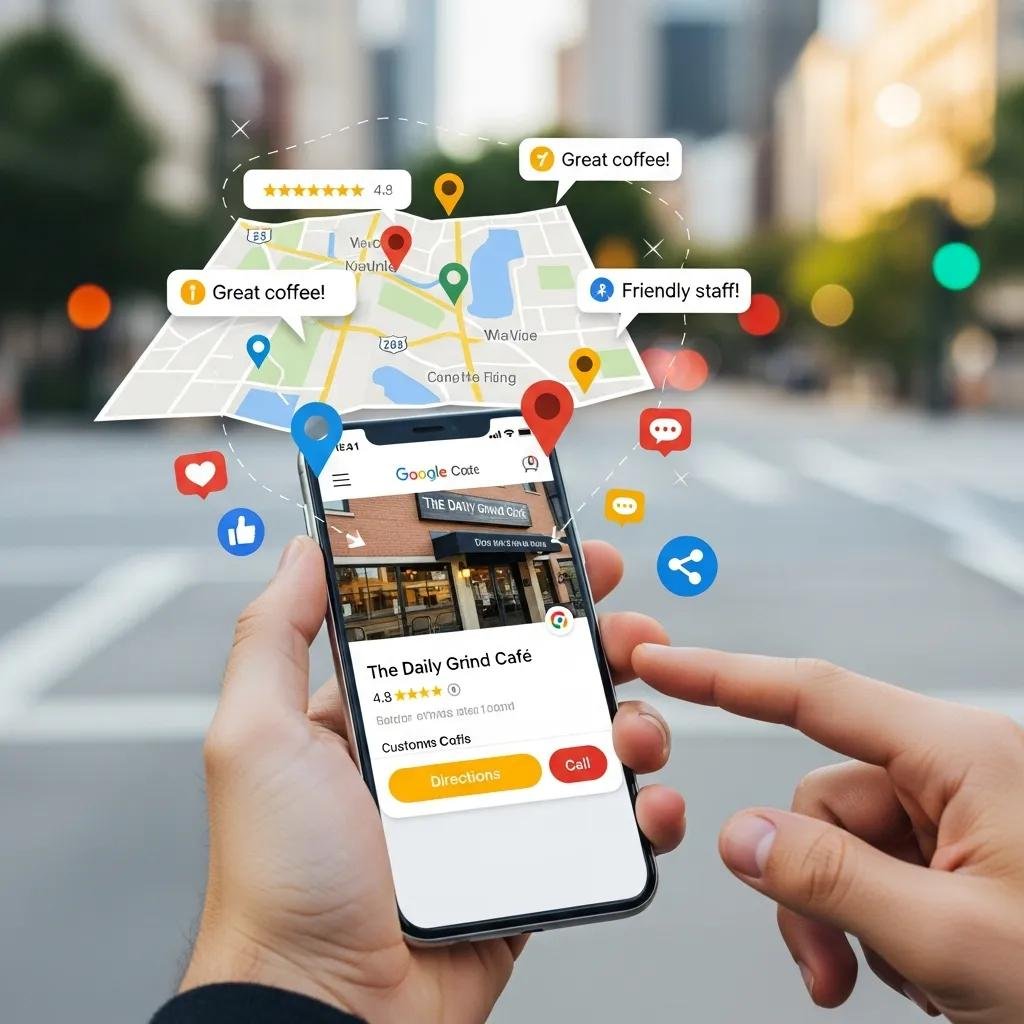
AI optimizes Google Business Profiles by using NLP to refine descriptions, automating regular posts and offers, and triaging Q&A and reviews to maintain high engagement and signal freshness. These mechanisms increase relevance and user interaction, which are key signals for local pack placement. AI can suggest category refinements, service keywords, and content templates for GBP posts that boost clicks and direction requests. Below is a short step-style approach you can apply immediately to your GBP.
- Use NLP to craft a GBP description that includes service + neighborhood phrases.
- Automate weekly GBP posts with seasonal offers and service highlights.
- Triage reviews and Q&A with sentiment analysis so urgent items receive priority responses.
These steps lead into a practical comparison of GBP elements and the specific AI enhancements that improve KPIs for local businesses.
AI-driven GBP elements compared:
| GBP Element | AI Enhancement | KPI Impact |
|---|---|---|
| Business Description | NLP-tailored local phrases | Higher relevance; more GBP clicks |
| Services & Categories | Automated keyword suggestions | Improved service query matches |
| GBP Posts | Scheduled, A/B-tested content | Increased post engagement and actions |
This table shows how targeted AI enhancements to key GBP elements produce measurable improvements in visibility and user actions. For local service providers, these GBP improvements translate directly into calls, clicks, and direction requests—key components of lead generation for local service businesses.
What AI Techniques Improve Google Business Profile Management?
AI employs techniques like natural language processing for descriptions, scheduled automation for posts, and sentiment analysis for reviews to maintain an optimized GBP. NLP can generate succinct business descriptions that include service-area entities and high-value keywords while preserving natural language. Scheduled automation ensures consistent posting cadence and can test different CTAs to see what drives clicks. Sentiment analysis prioritizes negative feedback for rapid response while highlighting positive reviews for use in marketing.
- NLP-driven copy: Improves query matching and user clarity.
- Automated posting: Keeps the profile active without manual effort.
- Sentiment triage: Ensures rapid handling of reputation issues.
These techniques also support how profile engagement impacts local rankings and next we examine that mechanism.
How Can AI Boost Local Rankings Through Profile Optimization?
AI boosts local rankings by improving the three core local signals—relevance, proximity (through consistent NAP and location terms), and engagement—via targeted GBP optimizations that increase user actions. When AI-driven copy and posts increase clicks and calls, Google interprets higher engagement as stronger relevance, which can elevate local pack placement. A quick AI-assisted GBP audit includes checking description keywords, service attributes, consistent citations, and response rate to reviews; fixing these often yields measurable local ranking gains.
- Audit for consistency: Align GBP fields with on-site location pages.
- Boost engagement: Use AI-driven posts and Q&A answers to earn clicks.
- Track KPIs: Monitor GBP clicks, calls, and direction requests to validate impact.
Improving these signals reinforces the value of combining content and profile work, leading naturally to hyperlocal content strategies that feed GBP relevance.
How Can Small Businesses Use AI for Hyperlocal Content Creation?

AI supports hyperlocal content by generating landing pages, blog posts, and FAQs that incorporate neighborhood entities, landmarks, and seasonal terms to match local intent and capture ‘near me’ queries. By seeding AI with local signals—service areas, common customer questions, and nearby references—businesses can produce tailored drafts quickly and then apply human edits for accuracy and trust. The workflow typically runs: seed → expand → cluster → publish, and AI helps scale each step so small teams can cover more micro-areas.
This strategic focus on tailoring content to specific geographic and cultural nuances is a cornerstone of effective local marketing.
Hyper-Localization: Adapting Marketing to Local Cultures
In today’s increasingly globalized market, marketing campaigns are greatly affected by their capacity to adapt to local cultures and technologies.
HYPER-LOCALIZATION IN GLOBAL CAMPAIGNS: THE KEY TO WINNING DIVERSE MARKETS
Hyperlocal content examples:
- Neighborhood Landing Page: Service + neighborhood + directional CTA.
- Seasonal Blog Post: Timely tips for local conditions (storm prep, pruning seasons).
- Local FAQ: Answers that map queries to service pages and contact actions.
These content types map directly to search intent and increase local relevance when combined with consistent schema and internal linking.
Content formats compared:
| Content Type | AI Role | Target Intent / Traffic Lift |
|---|---|---|
| Landing Page | Draft and localization | High-intent service queries |
| Blog Post | Topic expansion and SEO-ready drafts | Mid-funnel informational queries |
| FAQ | Question mapping and templated answers | ‘Near me’ and voice search queries |
This comparison clarifies where AI adds the most value for traffic and conversion in a local context. For tree services and contractors in Raleigh, AI-assisted templates can speed up localized pages that drive calls and booked jobs.
What Role Does AI Play in Generating Location-Specific Content?
AI generates location-specific content by infusing drafts with local entities and modifiers and producing CTA options oriented to nearby searchers. Prompting AI with neighborhoods, landmarks, and typical service scenarios yields copy that feels local and relevant, but human review is essential to verify accuracy and add credibility. Editors should add local specifics—service guarantees, exact neighborhoods served, or local project examples—to ensure trust while preserving AI efficiency.
- Seed with local terms: Give AI neighborhood names and common queries.
- Edit for authority: Add verifiable local details and human voice.
- Optimize for intent: Map content to transactional vs informational queries.
These steps make AI outputs actionable and trustworthy for local audiences.
How Does AI Support Keyword Research for Local SEO?
AI assists keyword research by expanding seed terms into long-tail local variants, clustering them by intent, and prioritizing based on predicted conversion potential. The workflow begins with a small set of high-value seed phrases then uses AI to generate related queries, group them by intent, and recommend which content types to build first. Prioritization favors high-intent clusters likely to generate leads, such as service + neighborhood + “near me” patterns.
- Seed → Expand: Start with core services and let AI suggest local modifiers.
- Cluster by intent: Group queries that match landing pages versus FAQ content.
- Prioritize for conversion: Focus on clusters likely to generate calls and bookings.
This process produces a targeted content roadmap that aligns with local search behavior and business goals.
How Does AI-Driven Reputation Management Improve Local Business Trust?
AI-driven reputation management scans review channels, tags sentiment, and drafts tailored responses to accelerate reply times and maintain consistent brand voice—actions that strengthen trust and can increase conversion from local searchers. Automated monitoring surfaces urgent negative reviews for rapid triage while suggesting personalized apologies or remediation steps. Faster, personalized responses increase perceived responsiveness and can lead to higher review volume and better average ratings over time, which supports local conversion metrics.
Automated review channel summary:
| Review Channel | AI Capability | Response Time / Personalization |
|---|---|---|
| Google Reviews | Sentiment tagging & draft replies | Minutes to hours; tokenized personalization |
| Facebook Reviews | Cross-platform aggregation | Hours; tone-matched drafts |
| Industry Directories | Alerting & escalation | Days; priority flagging for high-impact mentions |
This table clarifies how AI capabilities map to channels and expected response behaviors. Faster, consistent responses feed the lead generation funnel by improving trust signals and local click-to-call rates.
How Can AI Automate Review Monitoring and Responses?
AI automates review workflows by continuously scraping permitted review sources, classifying sentiment and urgency, and generating response drafts that include personalization tokens for human review. A typical flow sends alerts for critical negative reviews, queues suggested public responses and private remediation templates, and archives outcomes for trend analysis. Templates speed reply time while human review ensures appropriateness and compliance with local policies.
- Continuous scanning: Catch new reviews across platforms quickly.
- Sentiment classification: Prioritize items needing immediate attention.
- Draft personalization: Insert customer name or service reference into replies.
This automation reduces response latency and supports improved reputation metrics that influence customer trust.
What Impact Does AI Have on Customer Engagement and Trust?
AI improves engagement and trust by increasing response consistency, surfacing actionable feedback, and enabling data-driven improvements to services that customers notice. Faster replies and visible remediation efforts encourage more reviews and higher average ratings; both correlate with higher click-through and conversion rates in local search. For a hypothetical local contractor, reducing average response time by days to hours can increase inbound lead volume by improving perceived reliability and social proof.
- Higher review volume: Automated prompts and timely responses encourage more customers to leave feedback.
- Improved average rating: Quick remediation can convert negative experiences into neutral or positive reviews.
- More inbound leads: Stronger trust signals increase clicks, calls, and booking actions.
These reputation improvements connect directly to lead generation for local service businesses when tracked alongside GBP engagement and website conversions. SEORaleigh leverages OTTO AI-powered SEO and partnerships like Search Atlas to operationalize these AI workflows for clients such as local tree services and contractors in Raleigh, NC, ensuring AI-driven reputation and GBP improvements convert into measurable inbound leads for local service businesses.