SEO Terms and Definitions

Comprehensive SEO Glossary for Small Businesses and Contractors
Search engine optimization (SEO) is the practice of improving a website’s visibility in search engines by aligning content, technical signals, and external authority with how search systems evaluate relevance. Learning core SEO terms helps small businesses and contractors turn online searches into local leads by improving discoverability where customers look for services. This guide explains foundational concepts—technical SEO, on-page SEO, off-page/link signals, local SEO, AI-driven methods, backlinks, and structured data—so you can prioritize the highest-impact actions for lead generation. Many owners struggle to separate jargon from practical steps; this glossary breaks terms into clear definitions, mechanisms, and business-focused examples to accelerate implementation. Read on for concise definitions, actionable checklists, comparison tables, and semantic explanations designed to improve local visibility and conversion rates for small service businesses.
What is SEO? Core Concepts and Definitions for Small Businesses
Search engine optimization (SEO) means optimizing a website and its online presence so search engines can find, understand, and trust that content, which increases visibility for queries your customers use. SEO works by aligning three core components—technical foundations that enable crawling and indexing, on-page content and markup that clarify topical relevance, and off-page signals that demonstrate authority—so search algorithms surface your pages for relevant queries. For contractors and small businesses, effective SEO directly increases local leads and trust signals, turning searches like “roofer near me” into measurable customer contacts. The practical steps to get started involve auditing crawlability, improving page content to match intent, and building a small network of local citations and quality backlinks. These actions together form a repeatable process that compounds over time as content gains authority and relevance.
What SEO does in practice is best seen through a simple example. A local roofer targeting “roof repair Raleigh” must ensure (1) pages load and are indexable, (2) service pages use clear headings and descriptive content that match homeowner intent, and (3) local citations and review signals reinforce trust. These three layers reinforce each other: technical fixes allow content to be crawled, content communicates relevance, and links signal authority—together improving rank and clicks. Understanding these layers sets up the next sections, which dig into on-page signals, technical fundamentals, and local-specific tactics contractors should prioritize.
What Does Search Engine Optimization Mean?
Search engine optimization means deliberately shaping a website’s technical architecture, content, and external references so search engines can evaluate and rank pages for relevant queries. The mechanism is threefold: make pages discoverable (crawlability), make page content understandable (semantics and structure), and demonstrate authority (links and citations). The business benefit is increased qualified traffic: local customers who search for services and are ready to hire. For a contractor, SEO moves a page from obscurity to the local pack or top organic results, which often results in phone calls or appointment requests. This practical meaning connects directly to the need for structured content, fast performance, and consistent local signals.
Understanding what SEO means naturally leads to why it matters for small businesses and contractors and which outcomes to prioritize next.
Why is SEO Important for Small Businesses and Contractors?
SEO matters for small businesses because it targets users actively searching for services, offering a cost-efficient source of leads compared with broad advertising. Mechanistically, SEO improves visibility in local search results and the local pack, which increases calls, directions, and appointment bookings from customers with high intent. The immediate outcomes include higher local visibility, better perceived trust via search presence and reviews, and cost-efficient lead flow that compounds with ongoing content and local signal work. For contractors, prioritizing keywords tied to service + location and optimizing Google Business Profile entries are early, high-return tasks.
Key business outcomes of good SEO include boosted lead volume, improved conversion rates from search traffic, and a growing asset (ranked pages) that reduces dependence on paid ads over time. The next section explains on-page SEO elements that translate keywords and intent into page-level relevance and conversions.
What Is On-Page SEO? Essential Elements Explained
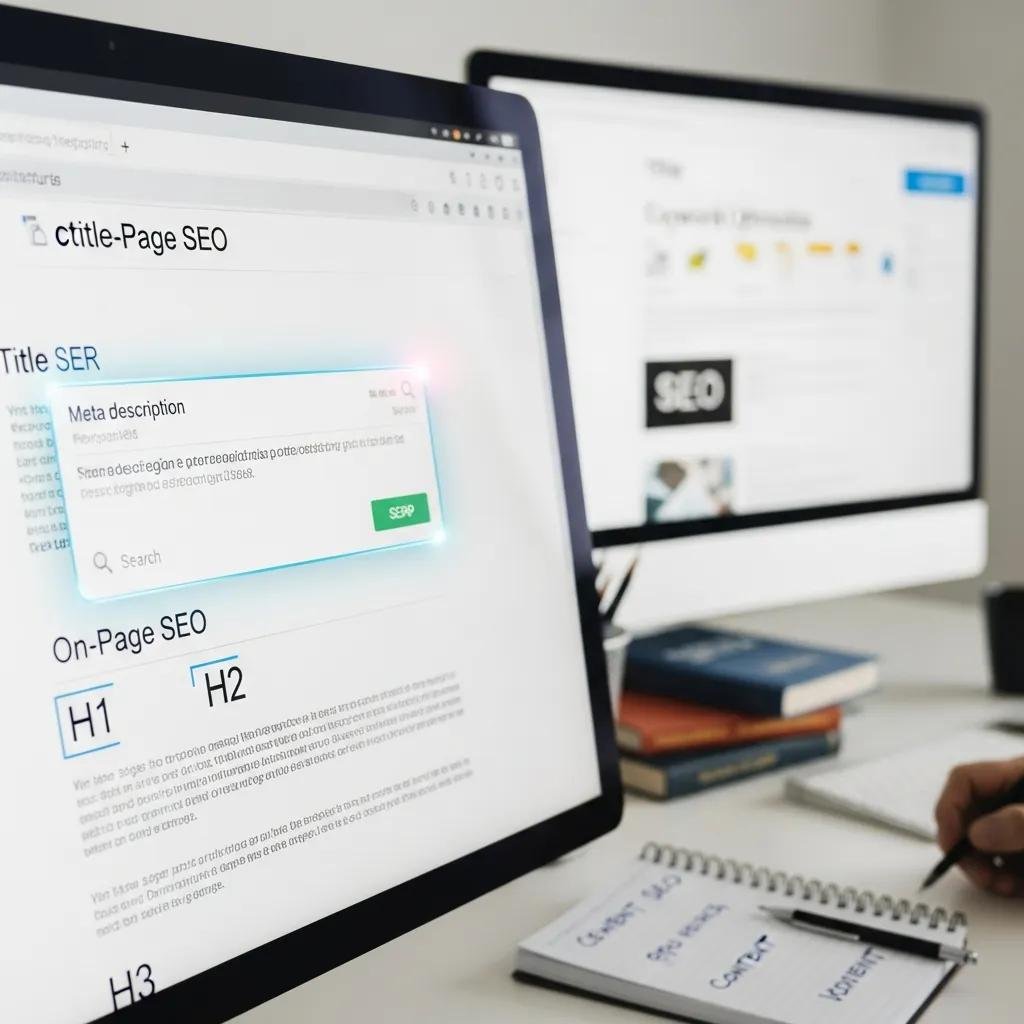
On-page SEO refers to the elements on individual web pages that communicate relevance and quality to search engines and users, including title tags, meta descriptions, headers, body content, internal links, and structured data. These elements work by signaling primary topics, answering user intent, and providing contextual clues so search engines can match queries to the best page. For small sites and contractor pages, prioritizing high-impact on-page changes—clear title tags, concise meta descriptions, locally relevant headings, and useful service content—delivers measurable ranking improvements. The next subsection breaks down the highest-impact on-page factors and includes a compact comparison table to guide quick fixes.
Which on-page elements matter most depends on intent and page purpose; service pages and location pages require explicit local signals and clear calls-to-action, while blog content needs topical depth and internal linking. Prioritization for small businesses starts with titles and meta descriptions, then content quality and E-E-A-T cues (experience, expertise, authoritativeness, trustworthiness). Improving these elements often yields rapid gains in click-through rate and relevance, which then feeds into better organic performance.
Different on-page elements map to specific roles and best practices:
| Element | Role | Best-practice Value |
|---|---|---|
| Title Tag | Primary relevance signal for a page | 50–60 characters, include target keyword and locality when relevant |
| Meta Description | Encourages clicks; summarizes page | 120–155 characters, clear benefit + CTA |
| Header Tags (H1/H2) | Structure content and indicate subtopics | Use one H1, descriptive H2s, include variations of keywords |
| Body Content | Demonstrates topical depth and relevance | 300–1,200+ words depending on intent; prioritize clarity and intent match |
| Internal Links | Distribute authority and help navigation | Use descriptive anchor text and link to service/location pages |
This table shows how small, consistent changes to on-page elements create clearer signals for both users and search engines. The next subsection ranks which factors to apply first and how to measure improvements.
Which On-Page SEO Factors Impact Your Website?
The highest-impact on-page factors for small businesses are title tags, meta descriptions, content relevance, internal linking, and clear structured data. Title tags remain the strongest single on-page relevance signal; a concise, localized title tells search engines and users what a page is about. Content quality and topical depth influence whether a page satisfies user intent—pages that answer common customer questions and include service specifics will rank better. Internal linking helps distribute page authority and guides crawlers to priority pages, while structured data clarifies entity relationships for rich results.
Practical how-to tips: write unique title tags with a primary keyword and locality, craft meta descriptions that summarize the page’s benefit and include a short call-to-action, and use H2/H3 headings to break content into scannable sections. Track performance with rank and click-through metrics to confirm improvements. Implementing these prioritized changes sets the stage for technical work that ensures pages can be indexed and served to searchers.
How Does Content Optimization Improve Search Rankings?
Content optimization aligns page content with searcher intent by combining topical depth, clear structure, and signals of authority to improve relevance and user satisfaction. The mechanism is semantic mapping: optimized content uses related terms, headings, and structured data to create a clear topic representation that search algorithms can match to queries. For a contractor service page, optimizing content can convert a vague service description into a focused page that answers price, scope, and process questions, improving conversion.
A before/after example: a basic “roofing services” page becomes a conversion-focused page by introducing a localized headline, a short services list, frequently asked questions, and a review snippet. After these optimizations, users find answers faster and engagement metrics improve, which can indirectly boost rankings. The next section examines technical SEO elements that make optimized content findable and performant.
Technical SEO Explained: Fundamentals for Website Performance
Technical SEO covers the infrastructure and signals that allow search engines to crawl, index, and render your site reliably—elements such as robots directives, XML sitemaps, canonical tags, mobile friendliness, and Core Web Vitals. These signals operate by ensuring search engines can discover pages, avoid duplicate content, and evaluate user experience factors like speed and stability. Small businesses benefit from technical fixes because they prevent indexation gaps and improve site usability, which in turn supports higher rankings and conversion rates. The next subsection lists key technical components and tools to detect issues, followed by a focused explanation of Core Web Vitals and remediation tips.
Effective technical SEO requires a checklist approach: verify crawlability with robots.txt and sitemaps, apply canonical tags to avoid duplicates, ensure responsive design and fast load times, and implement structured data for entity clarity. Monitoring tools like Google Search Console and Lighthouse surface issues and provide measurable thresholds to target. Addressing technical barriers ensures that on-page improvements are discoverable and can deliver value.
To help prioritize technical signals, consider this reference table:
| Technical Signal | Recommended Threshold | Common Fix |
|---|---|---|
| Crawlability (robots & sitemaps) | All important pages listed in XML sitemap; no disallow for critical pages | Update robots.txt, submit sitemap, fix 4xx errors |
| Indexability (noindex/canonical) | Canonical set for each canonical page; no accidental noindex | Implement canonical tags and remove noindex from indexable pages |
| Mobile friendliness | Pages usable and readable on mobile | Use responsive design and test on mobile-first tools |
| Core Web Vitals (LCP/INP/CLS) | LCP <2.5s, INP low latency, CLS <0.1 | Optimize images, defer noncritical scripts, fix layout shifts |
What Are the Key Technical SEO Components?
Key technical SEO components include robots.txt for crawl directives, XML sitemaps to list important URLs, canonical tags to resolve duplicate content, mobile-friendliness for device compatibility, and structured data to describe entities. Each component helps search systems understand what to crawl, index, and display as relevant results. For example, a correct sitemap ensures search engines discover new service pages quickly, while canonical tags prevent diluted ranking signals when similar pages exist.
Recommended tools for detection include server logs, Google Search Console for indexing reports, and Lighthouse or other performance tools for mobile and speed diagnostics. Implementing fixes often involves straightforward CMS changes, such as updating header tags, adding canonical links, and optimizing server responses. With these basics in place, the next subsection explains Core Web Vitals and specific remediation strategies.
How Do Core Web Vitals Affect SEO?
Core Web Vitals measure user-centric performance: Largest Contentful Paint (LCP) gauges perceived load speed, Interaction to Next Paint (INP) measures responsiveness, and Cumulative Layout Shift (CLS) tracks visual stability. Search engines use these metrics as part of page experience signals to prefer pages that load quickly and behave reliably for users. Lower LCP and CLS and fast INP reduce bounce rates and improve engagement, which can indirectly benefit ranking.
Common fixes include optimizing images and using efficient formats to improve LCP, deferring or async-loading noncritical JavaScript to lower INP, and specifying size attributes on media to prevent layout shifts and reduce CLS. Measuring with Lighthouse and field data from Search Console surfaces real-user metrics to prioritize work. Improving Core Web Vitals ensures that technical and content optimizations deliver their intended user and ranking benefits.
Local SEO Definitions: How to Dominate Raleigh’s Local Search
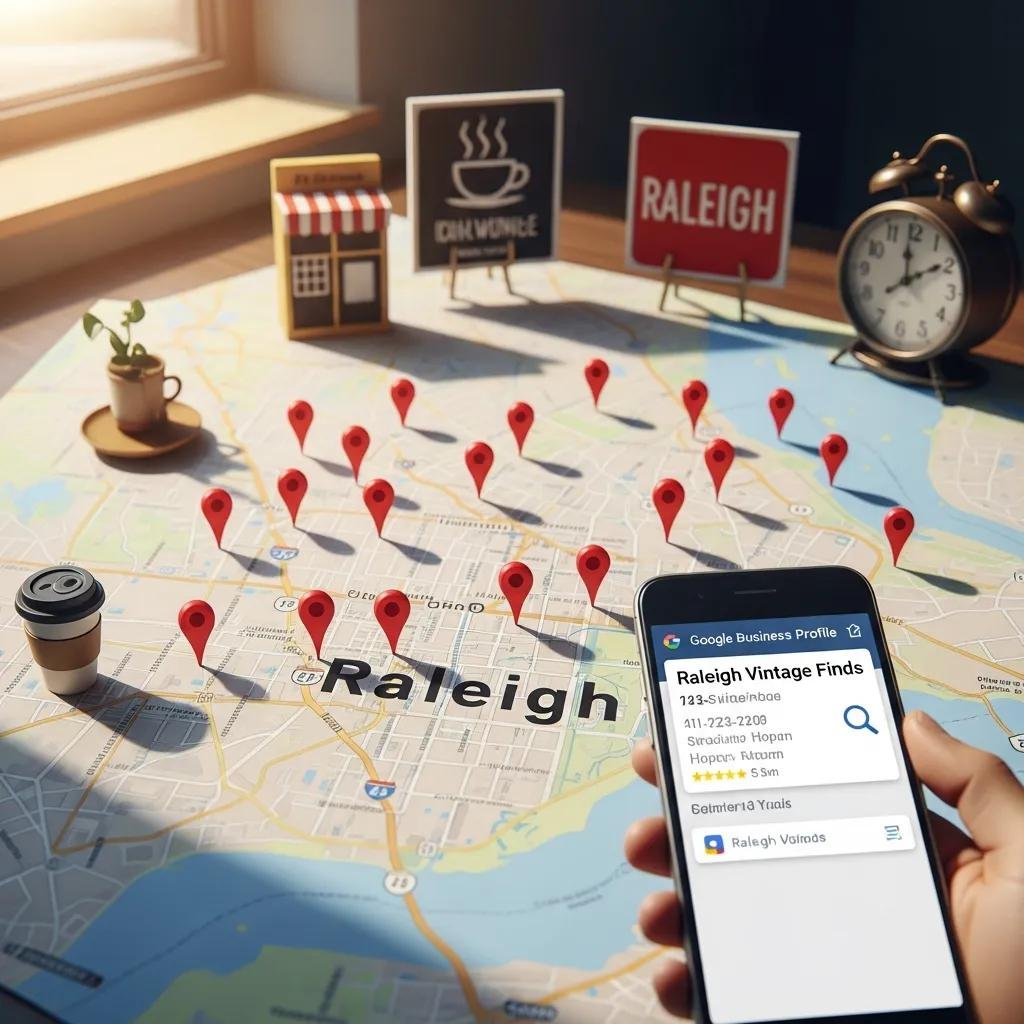
Local SEO focuses on optimizing visibility for geographically qualified queries by emphasizing signals like Google Business Profile (GBP), consistent NAP (name, address, phone), local citations, localized content, and review management. Local SEO works by combining relevance (matching query intent and services), proximity (user vs. business location), and prominence (authority signals such as reviews and citations) to influence the local pack and map results. For Raleigh-based contractors, optimizing local signals is often the fastest way to generate calls and appointments from nearby customers. Below are practical steps and a table that compares local elements with their ranking effects.
Local signals differ from broad organic SEO because they weight proximity and citation consistency more heavily, and they often use a separate local ranking model to surface map pack results. Small businesses should create and maintain accurate business profiles, gather reviews, and publish locally relevant service pages that reference neighborhoods or service areas. These local-first actions increase the chance of appearing in map-based searches where many service queries convert at high rates.
| Local Element | Effect on Local Rankings | Implementation Tip |
|---|---|---|
| Google Business Profile (GBP) | High: primary driver of local pack visibility | Complete all fields, select accurate categories, add services and photos |
| NAP Consistency | Medium-High: reduces confusion and supports trust | Ensure Name/Address/Phone match across major directories |
| Local Citations | Medium: reinforce legitimacy | Use reputable local directories and industry-specific listings |
| Reviews | High: influences clicks and local prominence | Encourage verified reviews and respond professionally |
| Local Content | Medium: improves relevance for neighborhood queries | Publish service pages targeting specific service areas and local topics |
What is Local SEO and Why Does It Matter for Raleigh Businesses?
Local SEO is the set of practices that increase a business’s visibility for geographically constrained searches by focusing on proximity, relevance, and trust signals. For Raleigh businesses, local SEO matters because many service-oriented searches include location intent—users often look for immediate, nearby providers and select from map pack or top local organic results. The mechanism is that search systems weigh proximity and validated local signals (GBP, citations, reviews) to surface nearby options for users with high intent.
Examples include searches like “AC repair Raleigh” or “emergency plumber near me,” where map placement and GBP details often determine click-through. For contractors and small service providers, appearing in local pack results frequently yields calls and direct conversions, making local SEO a priority over broad national content strategies. Understanding how to optimize GBP and local content is the next practical step.
How to Optimize Your Google Business Profile for Local Visibility?
A well-optimized Google Business Profile increases map visibility and encourages conversions by providing concise business attributes, service lists, photos, posts, and review management. Start by completing all profile fields, choosing the most accurate primary and secondary categories, and adding detailed service entries that match common search queries. Regularly post updates and photos to signal activity, and manage reviews by responding promptly to both positive and negative feedback.
Practical steps include verifying the profile, adding service-area details for contractors who work at client locations rather than a storefront, and maintaining NAP consistency across directories. SEORaleigh supports local businesses in these exact tasks, helping Raleigh contractors optimize GBP entries and local content to improve local pack visibility and drive leads. Implementing these GBP actions often leads directly into better click-through and more inbound customer contacts.
AI SEO Terms: Understanding Artificial Intelligence in SEO
AI in SEO refers to using machine learning and large language models to analyze patterns in search behavior, automate optimizations, and scale content and on-page improvements across many pages. AI automates repetitive detection of content gaps, meta optimizations, and structural improvements by identifying patterns that correlate with ranking uplift. For small businesses, AI can unlock scale—deploying consistent optimizations across service pages and local variants faster than manual edits. The next subsection explains how AI operates in SEO workflows and references OTTO as a named platform for AI-driven deployment.
The growing importance of artificial intelligence in SEO is further highlighted by its ability to refine search engine understanding and optimize campaigns.
AI’s Role in Modern SEO Strategies
SEO has become an important tool for businesses looking to increase their online visibility and reach potential customers. As technology continues to develop, Artificial Intelligence (AI) is becoming a key component of modern SEO strategies. AI allows search engines to better understand the context and user intent behind search queries, resulting in more effective SEO campaigns.
The role of AI in modern SEO strategies, 2023
What is AI in SEO and How Does It Automate Optimization?
AI in SEO uses pattern detection, language models, and automation pipelines to identify optimization opportunities and apply changes at scale—tasks that include content adjustments, meta tag updates, and structural tagging. The mechanism involves extracting correlations between content features and ranking outcomes, then generating prioritized recommendations or automated edits based on those patterns. Common automated tasks include generating improved meta descriptions, clustering related keywords for topic pages, and adding schema where appropriate.
AI systems supplement human expertise by surfacing high-impact changes and executing repetitive updates across thousands of pages. However, AI requires human review to maintain accuracy and local relevancy for small business pages where nuanced phrasing and regional terms matter. Understanding automation mechanics sets the stage for a focused list of business benefits and an explanation of OTTO’s role in this space.
How Does AI-Powered SEO Benefit Small Businesses?
AI-powered SEO benefits small businesses by delivering faster deployment of optimizations, the ability to scale consistent changes across many pages, and improved local ranking consistency through automated local signal adjustments. These advantages arise because AI platforms can analyze page-level performance, generate targeted suggestions, and automate repetitive updates with speed and consistency that manual processes rarely achieve. Small contractors gain time savings and a competitive edge when optimizations are rolled out systematically across service and location pages.
SEORaleigh offers OTTO, an AI-powered SEO platform and agency-assisted service that emphasizes AI automation—allowing deployment of thousands of webpage optimizations instantly—local SEO proficiency, and creative AI-generated solutions that provide a competitive edge. OTTO is presented as a tool to help small businesses and contractors scale on-page and local improvements while maintaining oversight. For Raleigh businesses seeking an initial assessment, SEORaleigh promotes a free website analysis to identify high-impact AI-ready opportunities.
This explanation of AI benefits naturally leads into how off-page signals like backlinks complement optimized content and technical performance.
What Are Backlinks and Link Building? Off-Page SEO Essentials
Backlinks are incoming hyperlinks from other websites that act as endorsements of a page’s authority and relevance; search systems use link signals to help evaluate trust and expertise. The mechanism is link equity transfer: authoritative, topically relevant sites linking to your pages convey credibility that can improve ranking potential. For small businesses, focusing on a few high-quality, local, and industry-relevant links (such as local directories, partnerships, and press mentions) is more effective than chasing large volumes of low-quality links. The following subsection defines backlinks and provides examples; the next explains ethical link-building tactics and risk management.
Quality matters: a link from a reputable local chamber or industry partner carries more positive weight than several irrelevant listings. Link-building strategies for small businesses should prioritize partnerships, local sponsorships, and content that naturally attracts links—combined with citation consistency to reinforce local authority. Keep in mind that search systems also look for natural link patterns and may discount manipulative schemes, so ethical approaches yield sustainable benefits.
Below are actionable guidelines and safe link-building tactics.
What Are Backlinks and Why Are They Important?
Backlinks are hyperlinks on external websites that point to your pages; they function as votes of confidence that help search engines measure a page’s authority and trustworthiness. The reason backlinks matter is that search systems interpret links from relevant, reputable sources as evidence that your content is useful and credible for specific topics. A high-quality backlink from a local news site or industry association can signal to search engines that your business is a trusted local provider, which supports higher placement in search results.
Examples of high-quality backlinks include coverage in local media, guest articles on industry-related blogs, or mentions by partners and suppliers. These links not only increase potential referral traffic but also strengthen the site’s ability to rank for competitive local queries. Building good backlinks is a steady process that complements on-page and technical work.
How Does Link Building Improve Domain Authority?
Link building improves domain authority by increasing the number and quality of external endorsements that point to your domain, which in aggregate signals trust and topical prominence to search engines. Mechanistically, each good backlink contributes a portion of link equity; when several authoritative, relevant sites link to a domain, that domain’s perceived authority rises, improving the chances of ranking for competitive keywords. For small businesses, targeted link building—such as local citations, partnerships, and PR—yields steady authority gains without the risks associated with aggressive or spammy tactics.
Safe tactics include building relationships with local organizations, creating shareable local guides or resources, and pursuing targeted outreach to relevant trade publications. Avoid buying links or participating in link schemes, which can lead to manual actions or loss of visibility. The next section turns to structured data, a complementary method to make content more machine-readable and eligible for rich results.
What is Structured Data and Schema Markup? Enhancing Search Visibility
Structured data uses schema markup (vocabulary from Schema.org) to label page content with specific entity relationships so search engines can understand and present information as rich results or knowledge panels. The mechanism is semantic triples—subject → predicate → object—where markup explicitly maps entities (e.g., LocalBusiness → offers → RoofingService) and attributes (e.g., opening hours, priceRange) to reveal intent and context to machines. For small businesses, implementing LocalBusiness, FAQPage, DefinedTerm, and Product/SoftwareApplication schema where appropriate increases the chance of enhanced SERP features and clearer entity representation.
Experts further emphasize how structured data transforms web content into machine-readable formats for enhanced search engine understanding.
Structured Data Markup for SEO
Structured Data Markup allows Web developers to embed semantics in HTML pages, thus enabling clients (search engines, client apps etc.) to distil machine-readable resource descriptions from HTML code. This approach emerged from the Semantic Web paradigm as a powerful alternative to traditional Web scraping. Its enablers are dedicated HTML extensions (e.g., RDFa) and controlled vocabularies (e.g., Schema.org).
Streamlining structured data markup and agile modelling methods, AM Ghiran, 2017
Structured data helps search systems connect page content to broader knowledge graphs, improving the likelihood of appearing in rich snippets, FAQ-rich results, and knowledge panels. Practical implementation begins with identifying the right schema types for service pages and FAQs and ensuring the markup reflects the same content presented to users. The next subsection explains how structured data helps search engines map content to entities; afterwards we list the most relevant schema types for small business SEO.
How Does Structured Data Help Search Engines Understand Content?
Structured data helps search engines by explicitly tagging entities and relationships so algorithms can more accurately interpret content, boosting the chance of generating rich results. In semantic triple terms, structured data turns ambiguous text into clear triples: ServicePage [entity] — provides — RoofRepair [entity], which improves machine-readability. This clarity allows search systems to associate pages with defined concepts and display appropriate SERP features like FAQs, review stars, or service listings.
Practical benefits include higher click-through rates from enhanced SERP features and improved consistency in how your business appears across knowledge panels. Implementing structured data should mirror visible site content and be validated with testing tools to avoid mismatches. With that foundation, the following subsection prioritizes schema types small businesses should consider.
Which Schema Types Are Relevant for Small Business SEO?
Small businesses should prioritize schema types that map directly to local services and content that answers user questions: LocalBusiness for service pages, FAQPage for Q&A sections, DefinedTerm or DefinedTermSet for glossary entries, and Product or SoftwareApplication where applicable. LocalBusiness schema reinforces core attributes such as service area and categories, while FAQPage markup increases the likelihood of question-and-answer rich results. DefinedTerm schema is especially useful for glossary and educational content to clarify term definitions for machines.
Implementation notes: ensure schema fields reflect the same user-visible content, keep markup up to date, and validate with structured data testing tools. Prioritizing these schema types enhances entity clarity and improves the chance of appearing in feature-rich result types that attract clicks. The final section addresses common questions small businesses ask about SEO fundamentals.
Frequently Asked SEO Questions: Clarifying Common Terms and Concepts
What Are the 5 Main Components of SEO?
The five main components of SEO are technical SEO, on-page SEO, content, off-page/link signals, and local/UX signals; together they form a holistic optimization strategy. Technical SEO ensures pages can be crawled and rendered, while on-page SEO aligns titles, headings, and structured data with user intent. Content provides the topical depth and answers users seek, and off-page/link signals supply authority. Local and UX signals determine proximity relevance and user satisfaction, which are critical for service businesses seeking local leads.
These components correspond directly to the earlier sections of this article and provide a checklist for prioritization: fix technical blockers, optimize high-value pages, produce intent-aligned content, build quality links, and strengthen local profiles and reviews.
What Are the Most Important SEO Terms for Small Businesses?
Small businesses should prioritize understanding Local SEO, Google Business Profile (GBP), backlinks, on-page optimization, and Core Web Vitals because these terms map directly to actions that increase local leads and conversions. Local SEO and GBP control visibility in map-based results, backlinks and citations influence authority, on-page optimization determines relevance for queries, and Core Web Vitals affect user experience and engagement. Mastering these terms helps owners focus on high-return activities that translate into real customer contacts.
Focusing on these prioritized terms will guide resource allocation: optimize your GBP and service pages first, then address technical performance and targeted link-building.
- SEO Glossary: Key terms to track and implement for local lead growth.
- Prioritized Actions: Clear sequence—technical fixes, GBP, on-page, content, links.
- Next Steps: Use diagnostic audits to quantify the opportunity and plan work.
For Raleigh businesses interested in an expert review, SEORaleigh’s OTTO solutions and agency-assisted services are positioned to scale optimizations and support local SEO proficiency.
- Free Website Analysis: A starting diagnostic to reveal quick wins and priorities.
- AI Automation: Deploy consistent on-page changes across many pages rapidly.
- Local Focus: Emphasize GBP and citation accuracy for immediate local results.